
Laboratory Capacity Is Not Delivery Capacity: Why Plant Production Must Be Planned Backward from the Final Product
 567
567Production capacity is one of the most common claims in commercial horticulture.
Suppliers often describe laboratory size, culture vessel numbers, greenhouse area, annual output, or the number of varieties in production. These figures can show scale, but they become misleading when different production stages are treated as the same type of inventory.
A plantlet in multiplication, a rooted plantlet, an acclimatized young plant, and a saleable greenhouse plant are not interchangeable units.
They have different survival probabilities, production times, space requirements, and commercial uses.
This creates a basic question:
At which stage should plant production capacity be measured?
If capacity is measured where plant numbers are highest, the result may look impressive but say little about actual delivery.
Plant numbers increase rapidly during multiplication and then decline through rooting, acclimatization, selection, grading, and greenhouse cultivation. Some plantlets are removed because of contamination. Some develop weak roots. Others survive but fail to reach the required specification by the delivery date.
The final quantity is therefore determined by a chain of biological conversion rates.
Laboratory output should be understood as potential inventory, not completed inventory.
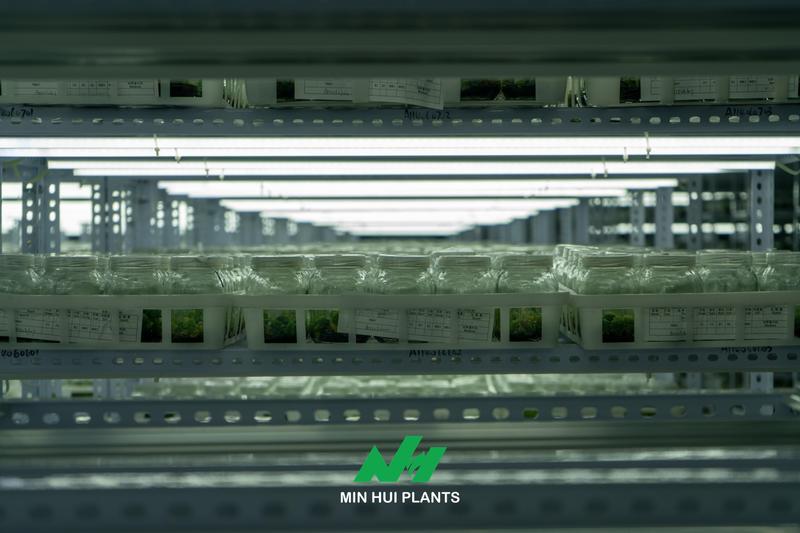
At MINHui, the more useful question is not:
“How many plantlets can the laboratory produce?”
It is:
“How many plants of the required variety, size, condition, and delivery date can reliably reach the customer?”
Plant production differs from manufacturing because biological time cannot always be compressed.
Roots require time to develop. Plantlets require time to adapt. Leaves require time to harden. Plants require time to reach the target size.
Plant capacity is therefore not only a question of equipment and area.
It is a question of time occupying space.
A greenhouse may appear to have available area, but that area may already be reserved for plants that must remain there for several months. A laboratory shelf may hold thousands of vessels, yet those cultures may belong to future orders, mother stock maintenance, or continued propagation.
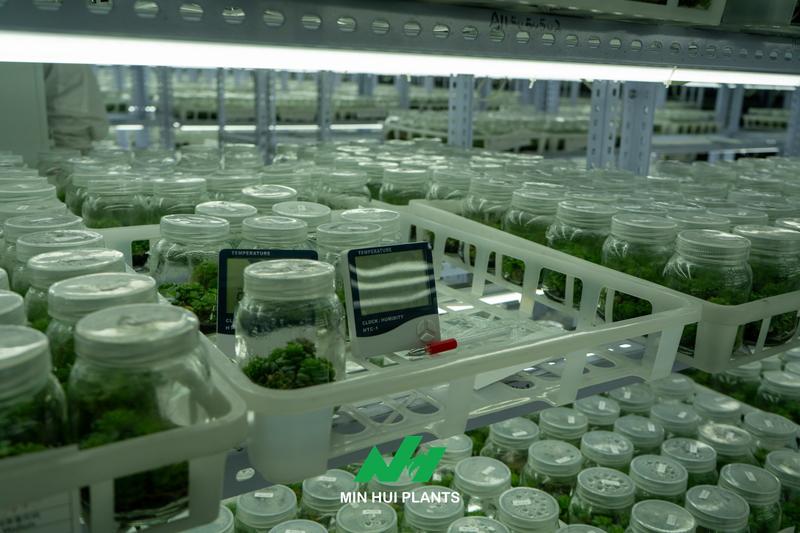
This leads to another principle:
Plant capacity should be calculated as a flow through connected stages, not as a static number in one location.
The production chain may include:
- mother plant preparation;
- sterile culture establishment;
- multiplication;
- rooting;
- acclimatization;
- greenhouse recovery;
- grading;
- export preparation;
- packing and delivery.
Each stage has its own capacity limit.
If multiplication expands while rooting or acclimatization remains unchanged, total delivery capacity may not increase. Extra plantlets simply become delayed inventory.
Living plants cannot be stored like manufactured parts. They continue to grow, age, and change condition while waiting. A plant that meets the required specification today may later become crowded, elongated, root-bound, or too large for its intended packaging.
Excess biological production is therefore not neutral inventory. It is time-sensitive risk.
This is why balanced capacity matters more than maximum capacity.
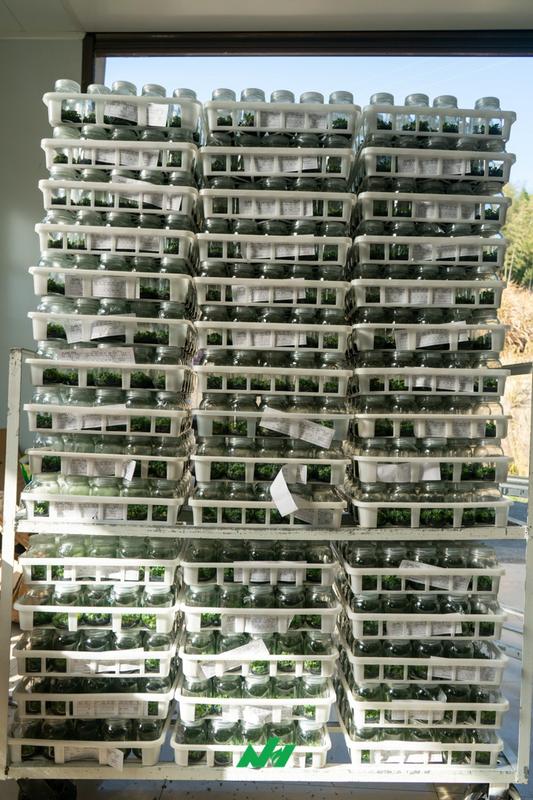
At MINHui, production planning considers expected losses, grading differences, slower-growing plants, and customer specifications. The starting quantity must be larger than the final delivery quantity, but the difference cannot be calculated using one fixed percentage.
Different varieties behave differently.
One variety may multiply quickly but root slowly. Another may root easily but perform unevenly during acclimatization. Some succulents survive well but require more time to develop a saleable form. Tropical foliage plants may grow quickly but show greater size variation.
Capacity planning therefore requires variety-specific data.
A general annual production number cannot fully explain whether a supplier can deliver a particular variety at a particular stage and date.
This becomes especially important in customized propagation. When a customer supplies a new variety, the laboratory may not yet know its stable multiplication rate, rooting response, acclimatization performance, or final grading distribution.
A more responsible approach is staged production.
Production begins with clean and stable source material, followed by limited multiplication. The plant is then observed through rooting and acclimatization before production is expanded.

The principle is simple:
Scale should follow predictability, not replace it.
When production expands before the process becomes stable, every unresolved weakness also expands. A small rooting, contamination, or uniformity problem can become a serious delivery issue across thousands of plants.
Buyers therefore need to know whether a quoted quantity represents:
- cultures in multiplication;
- rooted plantlets;
- acclimatized young plants;
- greenhouse inventory;
- plants meeting the requested specification;
- forecasted future production.
These stages represent different commercial realities.
A supplier may have a large quantity in multiplication but little immediate stock. Another may have lower laboratory output but more acclimatized, graded, export-ready plants.
Capacity should therefore be communicated by production stage and delivery date, not by one headline number.
Product specification also changes capacity.
One customer may accept plantlets in culture vessels. Another may need rooted and acclimatized young plants. A third may require a particular leaf count or pot size.
The later the required delivery stage, the more time, greenhouse space, labor, and environmental control are needed.
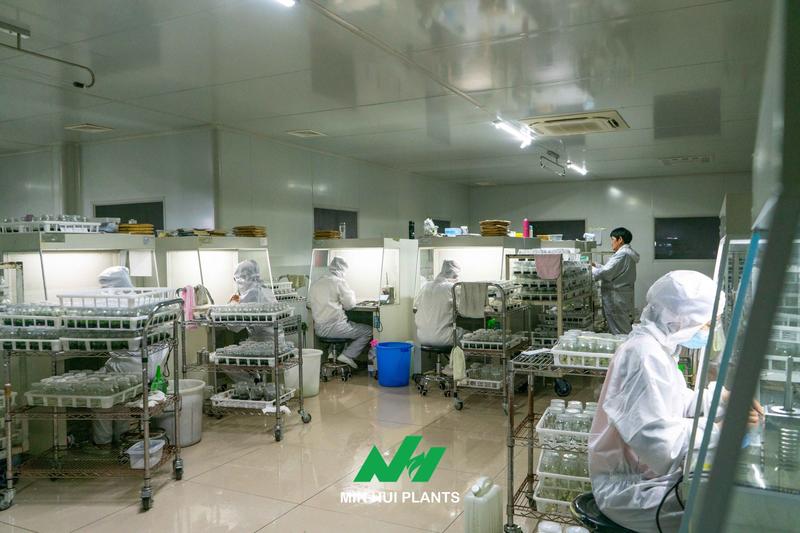
Reliable planning must therefore work backward from the final requirement:
- What plant stage does the customer need?
- What grading standard must be achieved?
- When must the plants be delivered?
- How long does the variety require at each stage?
- What losses and variation are realistic?
- When must production begin?
This converts a sales request into a biological production schedule.
It also prevents overpromising.
Late delivery in commercial horticulture is often caused by unrealistic assumptions made months earlier. Once biological time has been underestimated, the missing weeks cannot simply be recovered at the end.
Sometimes the most professional decision is to provide a longer but more realistic lead time.
For MINHui, reliable capacity is not the largest number the company can display. It is the quantity that can pass through every production stage, meet the requested specification, and arrive within the agreed period.
Laboratory scale creates potential.
Balanced production planning converts that potential into delivery.