
Succulent Export Quality: Why Root Maturity, Moisture Balance, and Pre-Shipment Hardening Matter
 477
477Succulent Export Quality Is Determined Before Shipping
Succulents are widely considered suitable for international transport because they can store water in their leaves, stems, or roots. However, drought tolerance does not automatically mean export readiness.
A succulent may appear healthy in the greenhouse but still perform poorly after packing, long-distance transportation, customs inspection, and replanting. Export quality depends less on appearance at the time of shipment and more on whether the plant can remain stable throughout the entire transition.
For commercial buyers, the real standard is not whether the plant survives the journey. It is whether the plant can recover quickly and return to predictable growth after arrival.
Moisture Balance Is More Important Than Full Appearance
Water management is one of the most critical parts of succulent shipping preparation.
Plants watered too close to dispatch may look fuller, but excessive moisture increases transport risk. Wet roots and saturated substrate reduce oxygen around the root zone, while soft, water-rich tissues are more vulnerable to bruising, decay, and temperature fluctuations.
At the same time, severe dehydration can weaken roots and delay recovery after replanting.
The correct objective is therefore not maximum hydration or maximum dryness. It is controlled moisture balance.
Shipping preparation should consider the variety, root condition, season, packing method, and expected transit time. Agave, Haworthia, Echeveria, Lithops, cacti, and Euphorbia differ significantly in their water-storage structure and root sensitivity. A single pre-shipment watering schedule cannot safely apply to all succulent groups.
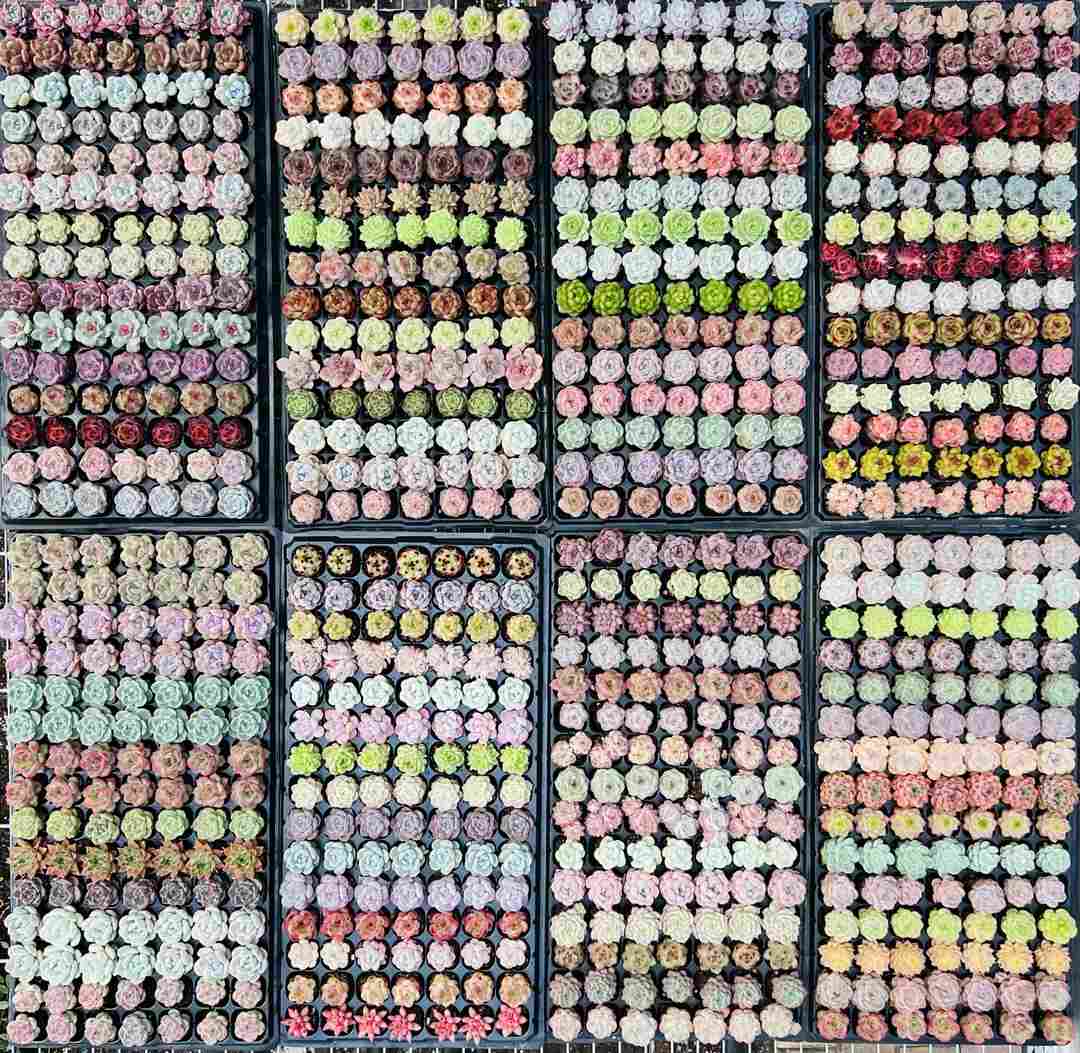
Root Maturity Determines Post-Arrival Recovery
Visible roots do not always indicate a commercially ready root system.
Very young roots may be active but fragile. Older roots may provide structural stability but may not respond quickly after transplanting. Export-ready succulents need roots that can tolerate cleaning, handling, temporary dryness, and replanting while retaining the ability to restart absorption.
Poor root maturity often causes delayed failure rather than immediate loss.
The plant may arrive alive but remain inactive for weeks. During this period, it can gradually lose lower leaves, develop discoloration, or decline unevenly. For importers and nurseries, this creates hidden costs through additional greenhouse space, labor, and longer sales cycles.
Root quality should therefore be evaluated by recovery potential, not simply by root quantity.
Hardening Expands the Plant’s Tolerance Range
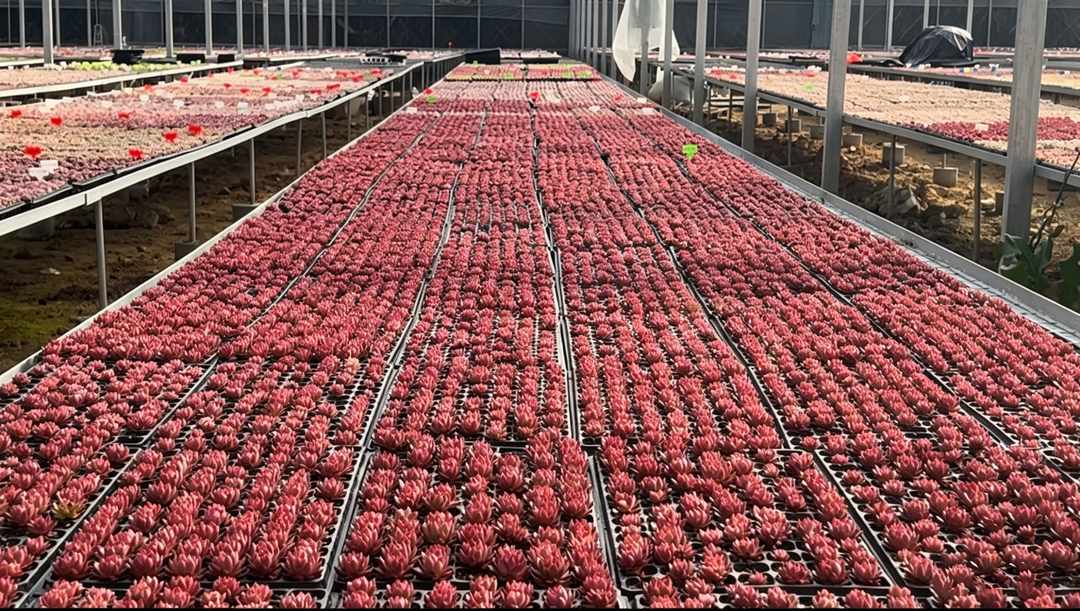
Conditions that produce rapid greenhouse growth do not always produce strong export plants.
Frequent irrigation, high humidity, soft light, and heavy fertilization may encourage fast development, but they can also create soft tissues and excessive dependence on stable conditions.
Pre-shipment hardening gradually reduces this dependence.
By adjusting irrigation, improving air movement, stabilizing nutrition, and avoiding overly soft new growth, producers can prepare succulents for darkness, vibration, temperature changes, and temporary water restriction.
Hardening should not be confused with severe stress. Excessive drying or sudden environmental change may damage the plant before shipping.
The purpose is controlled adaptation.
A properly hardened succulent is not invulnerable, but it can tolerate a wider range of conditions without rapid physiological decline.
Export Quality Is Different from Retail Appearance
The most attractive plant on the day of packing is not always the best plant for export.
Fresh leaves, active flower stalks, and heavily hydrated tissues may improve short-term appearance but increase the risk of breakage or moisture-related damage. A slightly more compact and mature plant often performs better during long-distance transportation.
This creates an important commercial distinction:
Retail quality is judged at one moment. Export quality is judged across the entire transition.
That transition includes preparation, packing, transport, arrival, replanting, and renewed growth.
Professional grading should therefore consider tissue firmness, root stability, growth maturity, and recovery potential alongside visual appearance.
Different Succulents Require Different Strategies
Succulents should not be treated as one uniform export category.
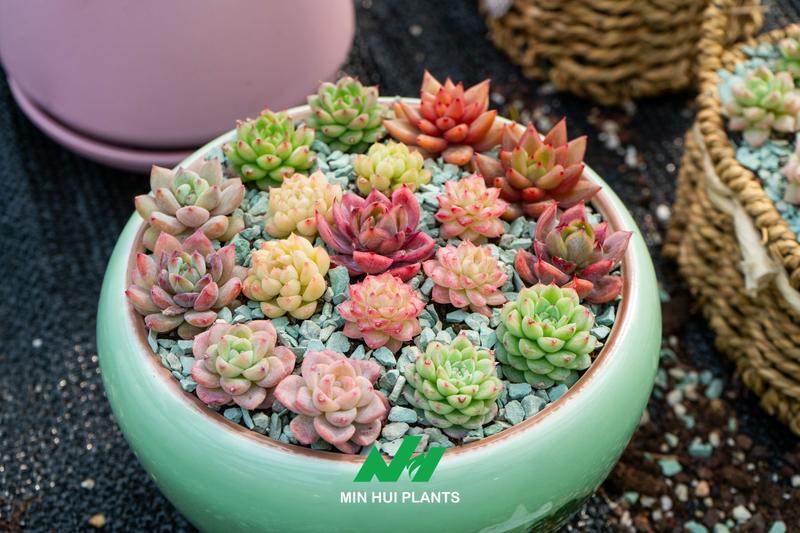
Agave generally tolerates dry conditions but requires protection from permanent leaf damage. Haworthia and related plants may pack efficiently, yet their fleshy roots can be sensitive to handling. Echeveria is often more vulnerable to leaf breakage and cosmetic injury. Lithops requires highly controlled moisture before shipping, while cacti demand careful protection of spines, roots, and growing points.
The term “succulent” describes a water-storage strategy. It does not define one universal production or shipping method.
Export protocols should therefore be based on plant structure, root biology, and expected transport conditions rather than on broad category labels.
Export Performance Begins in Production
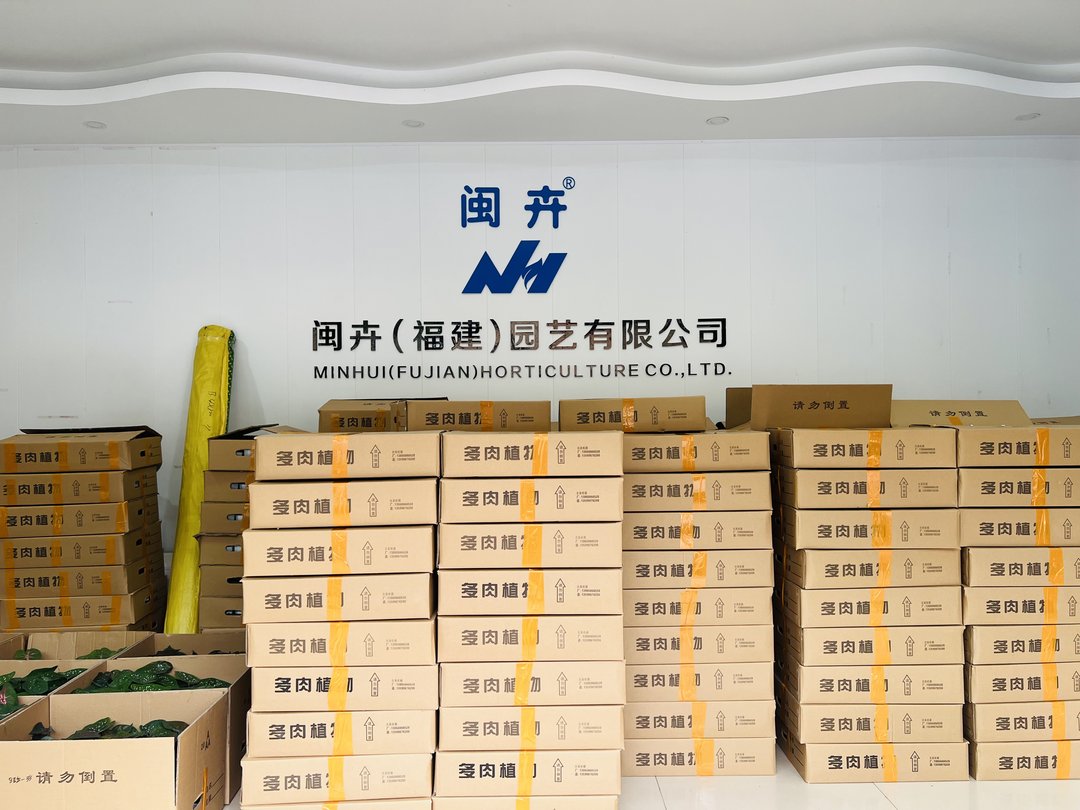
Packaging can reduce movement and physical damage, but it cannot correct immature roots, unstable moisture, soft growth, or poor pre-shipment conditioning.
These problems must be solved before the plant enters the carton.
For MINHui, succulent export quality should be evaluated by the plant’s ability to complete the full commercial journey and resume stable growth after arrival.
A successful shipment is not simply a shipment in which plants remain alive.
It is a shipment in which buyers receive usable, recoverable, and commercially manageable inventory.
Packaging protects the plant during transit. Production quality determines what happens after transit.