
Commercial Agave Production: Why Uniformity, Root Architecture, and Growth Stage Matter More Than Plant Size
 501
501Commercial Agave Quality Is More Than Plant Size
Agave is often evaluated through visible size, leaf number, color, and overall symmetry. These characteristics matter, but they do not fully explain whether a plant is suitable for commercial production, international transport, or continued nursery cultivation.
A large Agave is not automatically a high-quality Agave.
For wholesale buyers, the more important question is whether the plant has developed a stable structure, a functional root system, and a predictable growth pattern.
This distinction matters because Agave is a slow-growing crop. Problems hidden in the early production stage may require months to become visible, and correcting them later can consume significant greenhouse space and labor.
Uniformity Determines Commercial Efficiency
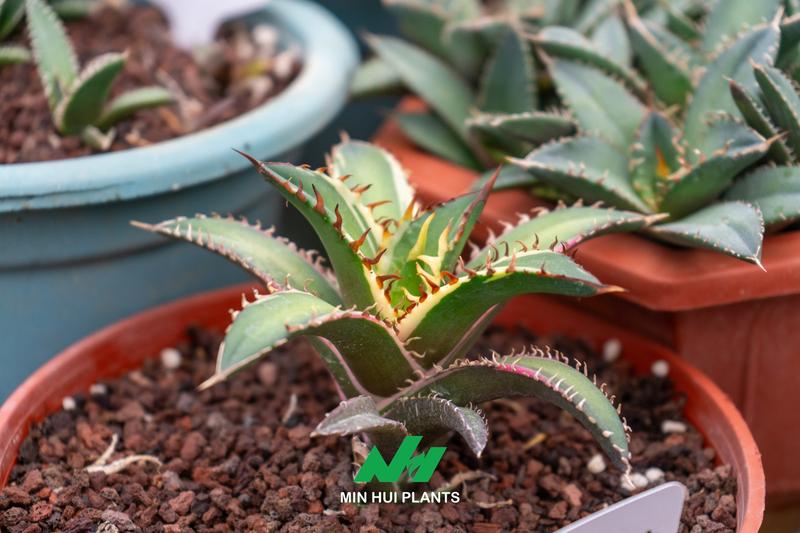
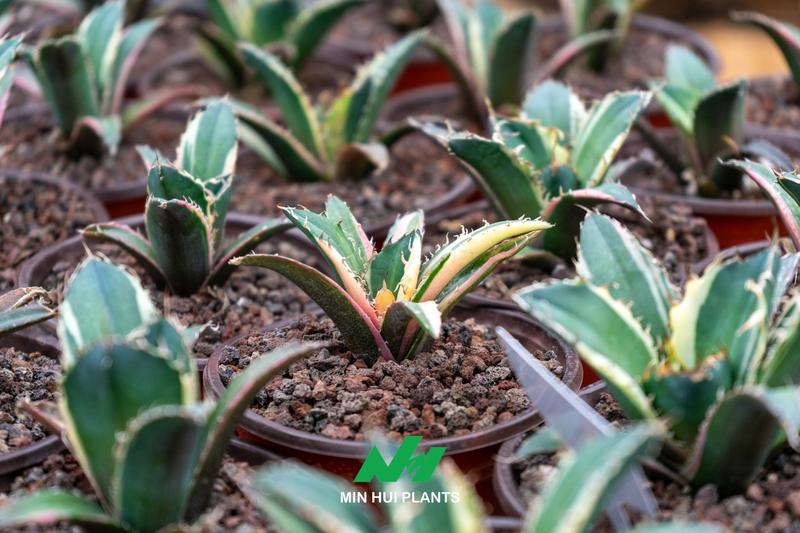
Individual Agave plants naturally show some variation. However, commercial buyers usually need batches that grow within a relatively consistent range.
Uniform plants are easier to grade, pack, cultivate, price, and resell. They also allow nurseries to plan irrigation, spacing, potting, and sales schedules more accurately.
A batch may contain healthy plants but still create operational problems if leaf spread, growth speed, or plant architecture varies too widely.
This is especially important for ornamental Agave varieties selected for compact form, distinctive margins, variegation, or specific leaf proportions. When these characteristics become inconsistent, the batch may require repeated grading and longer cultivation before sale.
Commercial uniformity does not mean that every plant must be visually identical.
It means that variation remains narrow enough for the batch to be managed as one product.
Root Architecture Matters More Than Root Volume
Agave plants are often considered highly drought tolerant, but drought tolerance above ground does not eliminate the need for a strong root system.
A dense mass of weak or damaged roots may appear impressive but perform poorly after transplanting. Commercially useful roots must provide anchorage, tolerate handling, and resume water uptake after replanting.
For export plants, root architecture is particularly important. Plants may be removed from containers, cleaned, dried, packed, transported, inspected, and replanted. Each step places pressure on the root system.
If the roots are immature, excessively soft, or damaged before shipment, the plant may remain inactive after arrival. It may survive for a period using stored water while failing to establish properly.
This delayed response can create false confidence.
The plant arrives alive, but commercial recovery has not yet begun.
For buyers, root quality should therefore be evaluated through establishment potential rather than visible root quantity alone.
Growth Stage Affects Transport and Recovery
Agave plants at different growth stages respond differently to handling and environmental change.
Very young plants are compact and efficient to ship, but they may have limited stored reserves and more delicate roots. Larger plants may tolerate short-term stress better, yet require more space, stronger packaging, and greater protection from leaf damage.
Rapidly growing plants can also be less suitable for shipment than stable, hardened plants. Fresh leaf tissue and active new growth are more sensitive to compression, temperature change, and prolonged darkness.
The ideal export stage is therefore not always the youngest or largest stage.
It is the stage at which the plant has enough structural maturity to tolerate transport without becoming inefficient to pack or difficult to re-establish.
Slow Growth Changes the Meaning of Quality
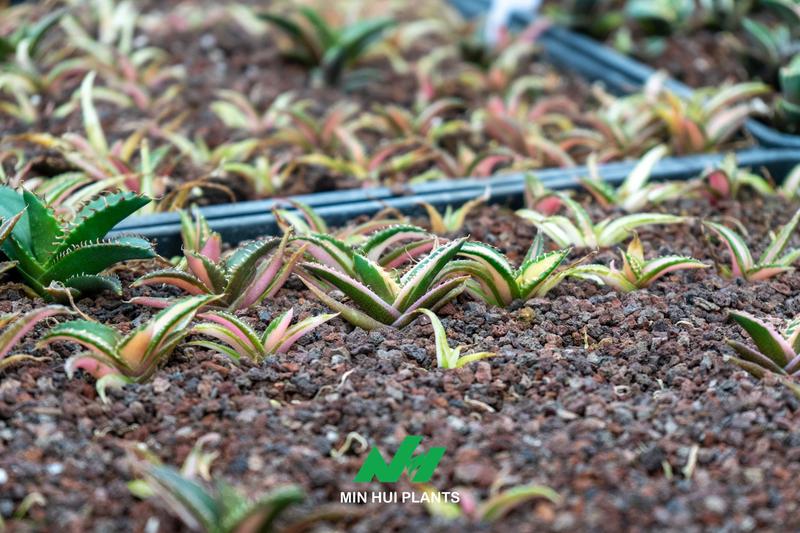
Agave production requires patience because many quality problems cannot be corrected quickly.
A plant with poor symmetry, weak rooting, damaged leaf margins, or unstable variegation may need a long additional growing period before it becomes commercially acceptable. In some cases, the defect may remain permanent.
This makes early selection especially important.
Removing unsuitable plants at an early stage protects greenhouse capacity. Continuing to cultivate weak or off-type material can consume months of space, irrigation, labor, and management without creating equivalent commercial value.
For Agave suppliers, quality control is therefore closely connected to time management.
A slow-growing plant makes every production decision more expensive.
Stable Production Is More Valuable Than Fast Expansion
Strong market demand can encourage suppliers to increase Agave production rapidly. However, expanding unstable material only increases future grading losses.
This is particularly relevant for selected cultivars and variegated Agave. Plant identity, pattern stability, form, and vigor must remain sufficiently consistent across repeated propagation.
Production speed has value only when the resulting plants remain true to type and continue to develop predictably.
A smaller stable batch may have greater commercial value than a larger batch containing uncertain characteristics.
For MINHui, Agave production should therefore be evaluated through four connected factors:
plant identity, structural uniformity, root maturity, and growth-stage suitability.
These factors determine whether plants can move efficiently from propagation to greenhouse cultivation, export preparation, and buyer production.
Agave Quality Is a Long-Term Production Result
Good packaging can protect Agave leaves during transportation, but it cannot correct weak roots, unstable characteristics, or poor early development.
Those qualities must be established during production.
For international buyers, the most valuable Agave is not simply the largest plant available on the shipping date. It is the plant that arrives with stable characteristics, recovers predictably, and continues developing without requiring excessive corrective management.
Plant size creates visual impact. Production stability creates commercial value.