A Succulent Greenhouse Is More Than a Shelter: How Microclimate Control Determines Plant Quality
 465
465A Succulent Greenhouse Is a Climate-Control System
A succulent greenhouse is often judged by its size, structure, or the number of plants it can hold. These factors matter, but they do not determine production quality on their own.
The real value of a succulent greenhouse lies in its ability to control microclimates.
Succulents are adapted to store water, but this does not mean they thrive under constant heat, intense light, or extremely dry conditions. Commercial production requires a balanced environment in which light, temperature, ventilation, humidity, irrigation, and root-zone conditions work together.
A greenhouse that only protects plants from rain is a shelter.
A greenhouse that stabilizes plant growth is a production system.
Light Must Build Structure, Not Stress
Light directly affects plant shape, color, compactness, and growth speed.
Insufficient light often produces elongated growth, open rosettes, weak leaf structure, and reduced coloration. Excessive light can cause bleaching, leaf burn, damaged growing points, and long recovery periods.
The correct light level is not the maximum amount a plant can survive. It is the level that allows the plant to maintain stable photosynthesis without accumulating unnecessary stress.
Different succulent groups require different light strategies. Agave and many cacti generally tolerate stronger light than Haworthia, Gasteria, or newly acclimatized tissue culture plants. Young plants also require different conditions from mature stock.
For this reason, professional succulent greenhouses should use production zones rather than one universal shading level.
Ventilation Connects Temperature and Humidity
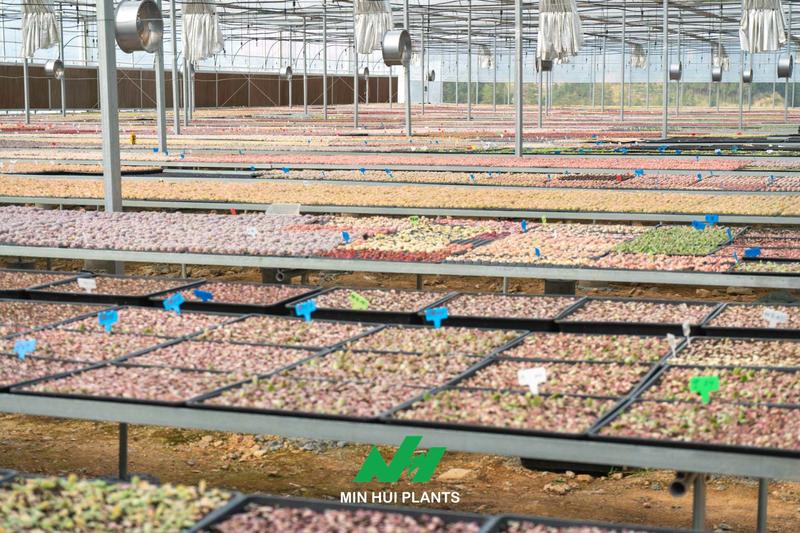
Ventilation is one of the most important but underestimated factors in succulent production.
Strong light and high temperature can increase water loss rapidly. High humidity combined with weak air movement can keep leaf surfaces and root zones wet for too long. Both conditions increase production risk.
Effective ventilation removes excess heat, reduces stagnant humidity, and helps plant tissues develop greater strength. It also makes irrigation more predictable because the greenhouse does not remain wet for an uncontrolled period.
However, ventilation must be managed carefully. Excessive hot or dry airflow can dehydrate young roots and damage newly transferred plants.
The purpose is not simply to move as much air as possible.
It is to maintain stable air exchange without creating abrupt stress.
Root-Zone Conditions Matter More Than Air Temperature Alone
Greenhouse air may appear suitable while the root zone remains too wet, too hot, or poorly aerated.
This is especially important for succulents because many root problems develop before visible symptoms appear above the substrate. A plant may retain firm leaves by using stored water even while its root system is declining.
Substrate structure, container size, bench design, drainage, irrigation timing, and airflow beneath the plants all influence root-zone stability.
A professional greenhouse therefore evaluates more than daytime temperature. It also monitors how quickly the substrate dries, whether roots receive enough oxygen, and whether moisture remains consistent across the batch.
Root-zone management determines whether plants merely survive or continue producing healthy new growth.
Uniformity Requires Zoning
A large succulent greenhouse rarely has one completely uniform environment.
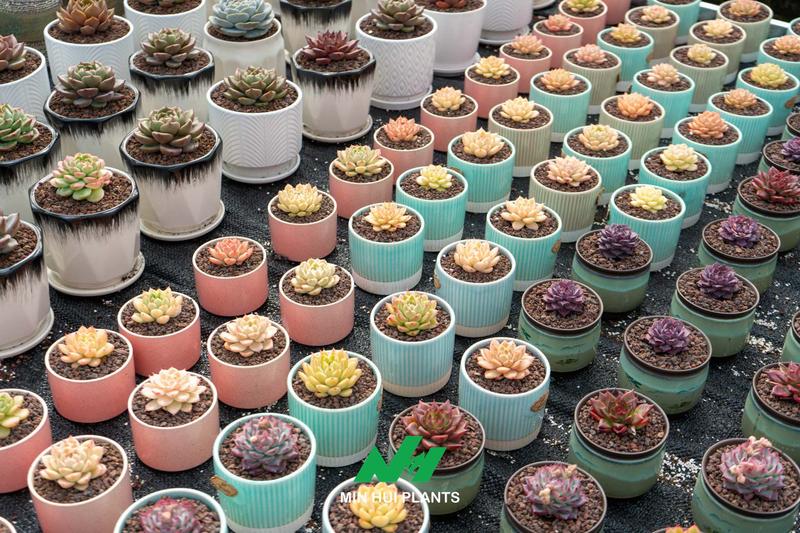
Areas near doors, sidewalls, cooling systems, roof openings, and central walkways may receive different levels of light, temperature, and airflow. Even small environmental differences can create visible variation over time.
If plants with different biological requirements are placed together, irrigation and climate control become difficult. A watering schedule suitable for one group may be excessive for another.
Production zoning helps solve this problem.
Plants can be organized according to growth stage, root sensitivity, light requirement, irrigation frequency, and commercial schedule. Newly acclimatized plants may require a more protected zone, while mature Agave or cacti may perform better under stronger light and faster drying conditions.
Zoning allows the greenhouse to manage several biological environments within one facility.
Seasonal Management Is More Important Than Fixed Settings
Succulent greenhouse management cannot rely on one permanent set of conditions.
In summer, the main risks may include excessive heat, sunburn, rapid dehydration, and root-zone temperature. During humid or rainy periods, the greater risk may be slow drying, fungal pressure, and reduced root oxygen. In cooler months, irrigation frequency and ventilation patterns must also change.
The correct greenhouse strategy therefore follows plant response and seasonal conditions rather than a fixed calendar.
This is particularly important in commercial production, where environmental mistakes affect entire batches rather than individual plants.
A short period of poor climate control may delay growth, increase grading losses, and extend the time required to reach a saleable specification.
A Greenhouse Creates Commercial Predictability
The purpose of greenhouse control is not to eliminate all natural variation.
It is to keep variation within a manageable range.
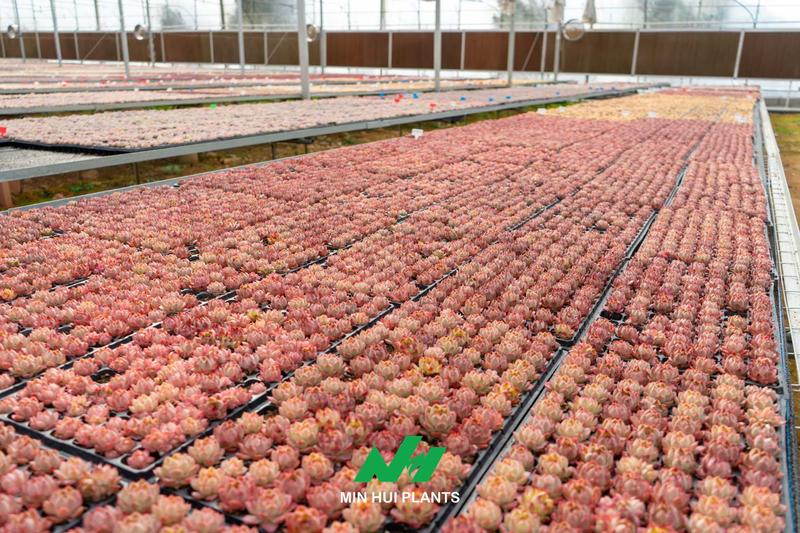
When light, moisture, airflow, and temperature remain balanced, plants develop more consistent shape, stronger roots, and more predictable growth. This improves grading, inventory planning, packing efficiency, and delivery scheduling.
For MINHui, a succulent greenhouse should not be evaluated only by how many plants it contains. It should be evaluated by how effectively it converts environmental control into stable commercial quality.
A greenhouse provides protection. Microclimate management creates consistency.