Tropical Plant Greenhouse Management: Why Vapor Pressure, Root-Zone Stability, and Airflow Determine Commercial Quality
 166
166A Tropical Plant Greenhouse Is Not Simply a Warm, Humid Space
Tropical plants are often associated with warmth, humidity, and filtered light. However, maintaining high temperature and humidity alone does not create a professional tropical plant greenhouse.
Commercial production requires a controlled relationship between air temperature, leaf temperature, humidity, airflow, light, irrigation, and root-zone conditions.
If these factors are managed separately, plants may grow quickly but develop soft tissues, weak roots, uneven leaf size, or poor adaptability. The objective is not to reproduce a rainforest inside a greenhouse.
The objective is to create a stable production environment that supports predictable plant growth.
Vapor Pressure Deficit Is More Useful Than Humidity Alone
Relative humidity is commonly used to describe greenhouse conditions, but humidity percentages can be misleading when separated from temperature.
Warm air can hold more moisture than cool air. As a result, the same relative humidity may create very different levels of water loss from plant leaves under different temperatures.
Vapor pressure deficit, often called VPD, provides a more useful way to understand this relationship. It describes the drying force between the moisture inside the leaf and the surrounding air.
When VPD is too high, plants lose water faster than their roots can replace it. Leaves may curl, edges may dry, and newly acclimatized plants can decline rapidly.
When VPD is too low, transpiration becomes weak. Calcium movement may slow, leaf surfaces remain wet longer, and disease pressure can increase.
The correct target is not maximum humidity.
It is a balanced transpiration environment in which roots can support leaf demand without placing the plant under unnecessary stress.
Root-Zone Stability Controls Above-Ground Growth
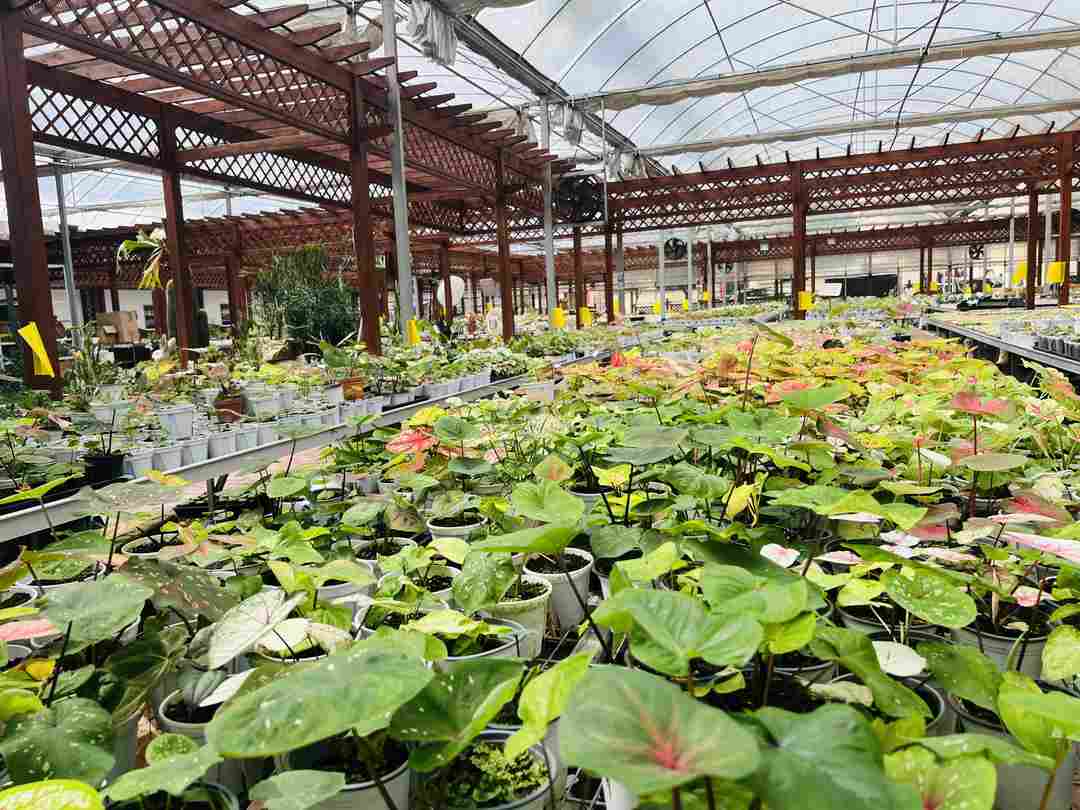
Tropical plants can maintain attractive foliage temporarily even when root conditions are deteriorating. This makes root-zone problems easy to underestimate.
Excessively wet substrate reduces oxygen around the roots. High root-zone temperature can accelerate respiration and weaken root function. Uneven irrigation creates different growth rates within the same batch.
A professional greenhouse therefore monitors more than air temperature and humidity.
Substrate structure, drainage, container size, irrigation interval, water quality, and bench airflow all influence root performance.
Healthy foliage is produced by a functioning root system. When root conditions become unstable, leaf quality eventually becomes unstable as well.
Airflow Must Be Gentle but Continuous
High humidity without sufficient airflow creates a stagnant greenhouse environment.
Moisture remains on leaf surfaces, plant canopies dry slowly, and temperature differences develop between dense production zones. These conditions increase the risk of fungal and bacterial problems.
Tropical plants benefit from continuous air exchange, but strong direct airflow can damage soft leaves and increase water loss.
The goal is not wind.
It is uniform air movement.
Gentle circulation helps equalize temperature, shorten leaf-wetness duration, improve gas exchange, and reduce local humidity pockets inside dense foliage.
This becomes increasingly important as plant density rises. A greenhouse may appear well ventilated at aisle level while the air inside the crop canopy remains almost motionless.
Light Should Support Leaf Quality, Not Only Growth Speed
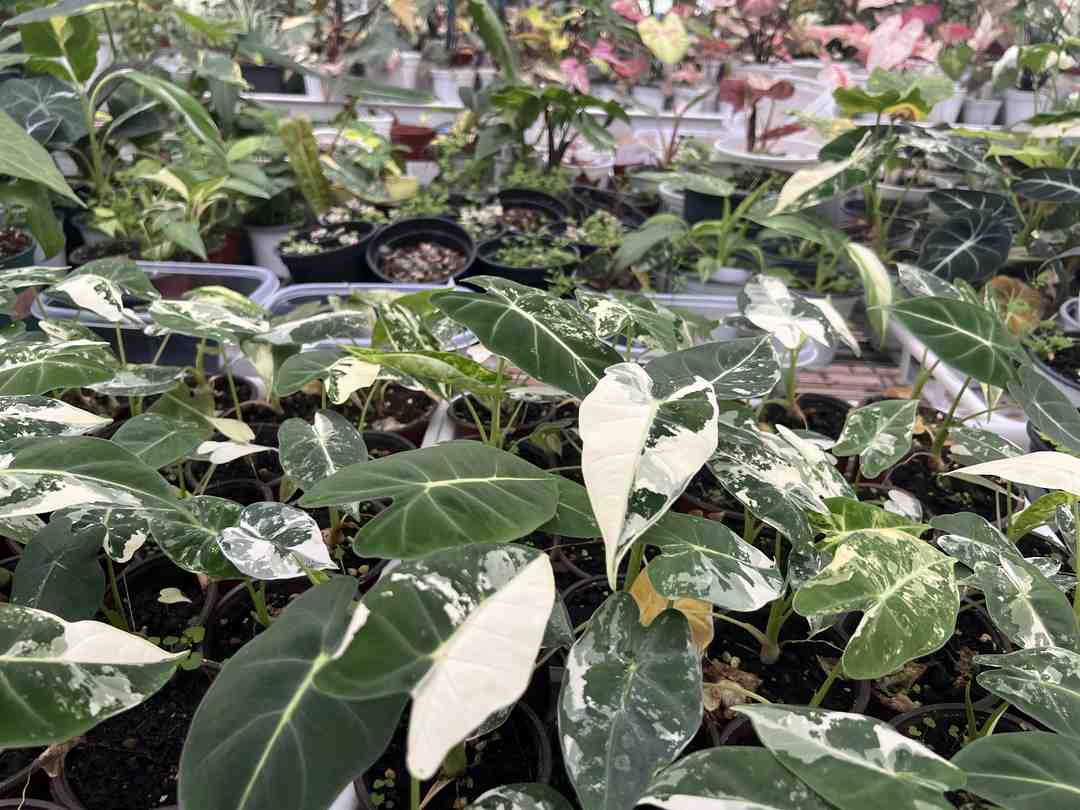
Insufficient light can produce large but weak leaves, long internodes, unstable coloration, and slow root activity. Excessive light can cause bleaching, leaf scorch, damaged variegation, and reduced market quality.
The correct light level depends on the plant species, growth stage, leaf thickness, variegation, and previous production environment.
Monstera, Philodendron, Anthurium, Alocasia, Calathea, and tissue-cultured tropical plants cannot all be managed under one fixed shading level.
Newly acclimatized plants usually require more protection. Established plants may need gradually higher light to develop stronger tissues and more stable growth.
Light acclimation should therefore be progressive.
A sudden move from a protected zone into stronger light can damage foliage faster than the plant can adjust its photosynthetic system.
Production Zoning Improves Batch Uniformity
Large tropical greenhouses naturally contain environmental differences.
Areas near cooling pads, sidewalls, roof vents, doors, and central aisles may vary in temperature, airflow, humidity, and light. These differences can create uneven growth even when all plants receive the same irrigation schedule.
Production zoning allows plants to be grouped according to:
- growth stage;
- light requirement;
- root sensitivity;
- humidity tolerance;
- irrigation frequency;
- target delivery schedule.
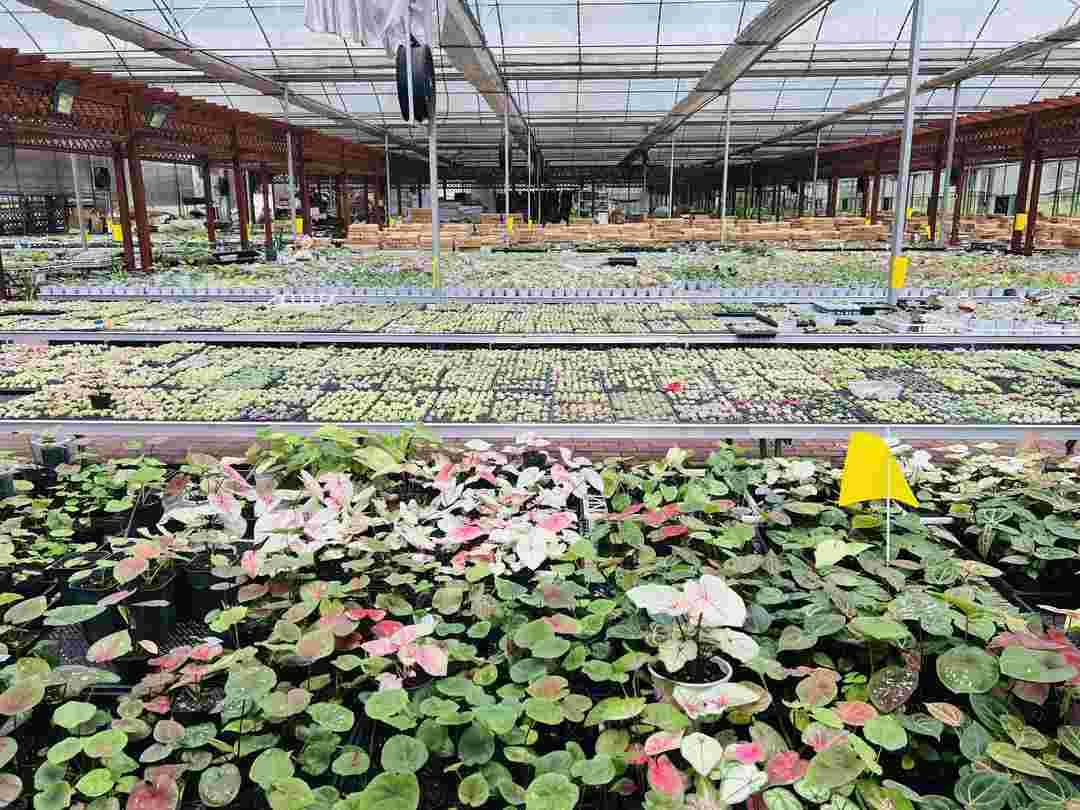
Recently acclimatized tissue culture plants should not be managed in the same zone as mature tropical foliage plants. Variegated cultivars may also require different light and growth strategies from fully green varieties.
Zoning turns one greenhouse into several controlled production environments.
Commercial Quality Depends on Predictability
A tropical greenhouse is successful when plants do more than grow.
They should develop within a predictable range of leaf size, plant height, root condition, coloration, and production time.
This consistency improves grading, inventory planning, packing, and delivery scheduling. It also reduces the amount of corrective management required before plants become saleable.
For MINHui, tropical plant greenhouse quality should therefore be evaluated through environmental stability and batch performance, not only through greenhouse area or plant quantity.
A warm greenhouse can accelerate growth.
A controlled greenhouse creates reliable commercial plants.