
The Most Fragile Stage in Tissue Culture Is Not the Laboratory: Why Acclimatization Determines Commercial Success
 349
349Most discussions about tissue culture focus on multiplication speed, sterile technique, and laboratory capacity. These factors are important, but they create only potential plants. A plantlet inside a culture vessel has not yet proven that it can survive as a commercial plant.
That proof begins during acclimatization.
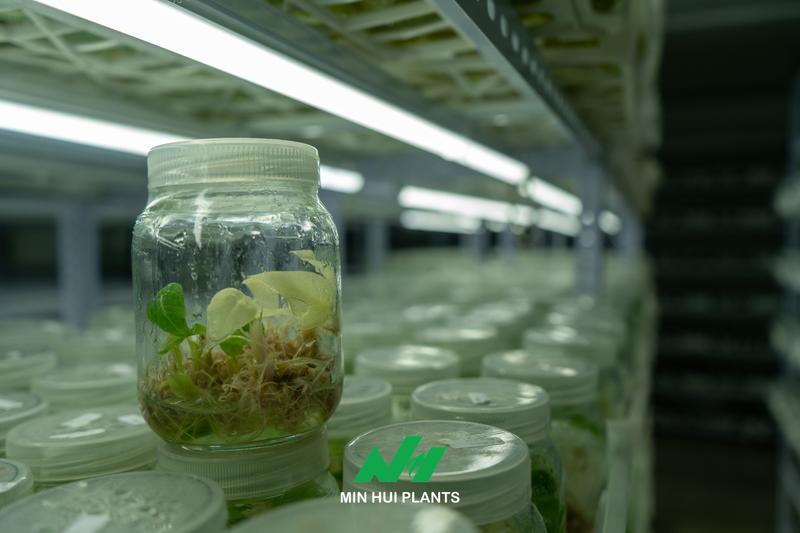
Inside a culture bottle, plantlets grow in an unusually protected environment. Humidity is extremely high, temperature is relatively stable, nutrients are directly available, and external microbial pressure is limited. The plant does not need to regulate water loss in the same way as a greenhouse-grown plant. Its roots may absorb nutrients effectively in culture media, yet perform poorly in conventional substrates.
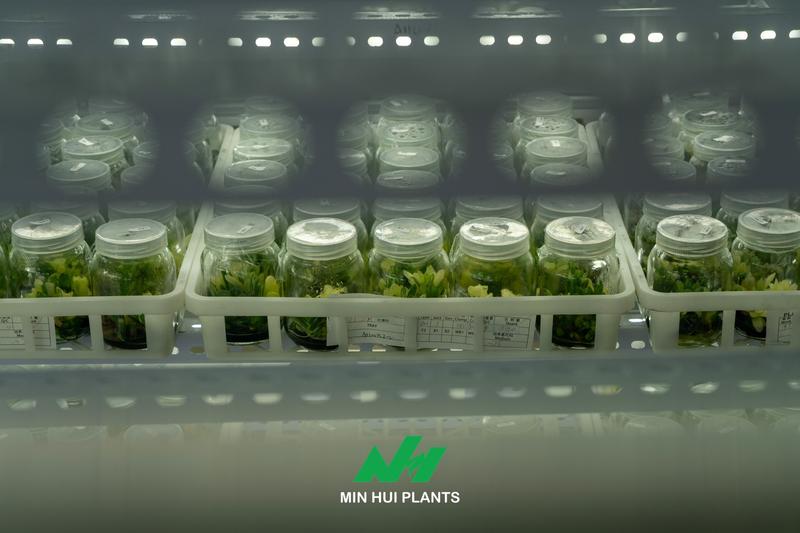
This means that removing a plantlet from the bottle is not simply a change of location. It is a biological shock.
The plant must suddenly learn to control transpiration, develop functional roots, tolerate stronger light, respond to airflow, and coexist with microorganisms. Several weak systems must begin working at almost the same time.
This is why acclimatization should not be viewed as the final step of tissue culture. It is the first real test of whether laboratory propagation has produced a usable plant.
A laboratory can report a high multiplication rate while still creating poor commercial results. If plantlets are too soft, roots are poorly formed, leaves lose water rapidly, or batches respond unevenly after transplanting, the apparent laboratory efficiency may disappear during greenhouse transfer.
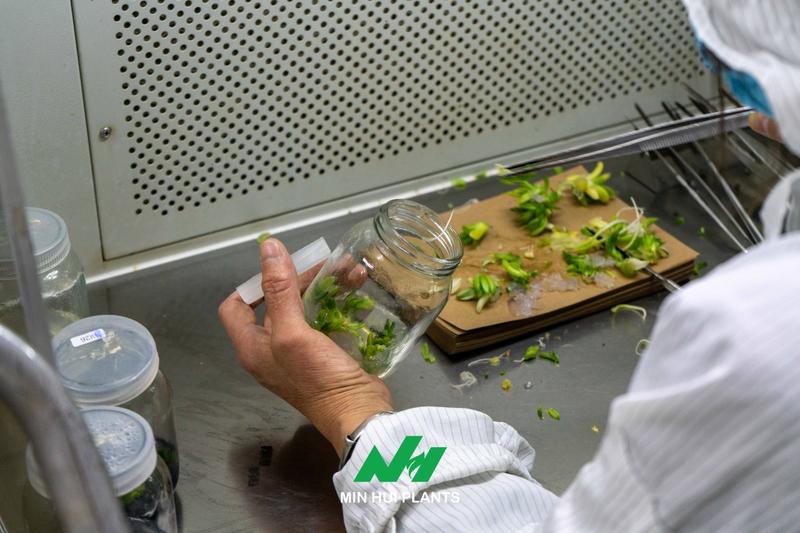
This leads to a central production principle:
The value of tissue culture should be measured by the number of stable plants entering commercial growth, not by the number of plantlets produced in bottles.
For wholesale buyers, the distinction is critical. A large quantity of plantlets means little if survival becomes unpredictable after delivery. Commercial production depends not only on how many plants exist, but on how many continue growing within a controlled and expected range.
At MINHui, acclimatization begins before plantlets leave the laboratory. Root quality, shoot strength, leaf structure, plant height, and developmental balance must be considered in advance. Plantlets that look green and complete may still be unsuitable for transfer if their physiological condition is weak.
A visually attractive plantlet is not automatically an acclimatization-ready plantlet.
The timing of transfer also matters. Moving plants too early may expose immature roots and leaves to stress they cannot manage. Moving them too late may produce elongated, crowded, or overly soft growth that performs poorly outside the vessel. The correct transfer window depends on the plant genus, culture conditions, rooting response, and intended production stage.
Different plants fail for different reasons.
Tropical foliage plants may lose water quickly through broad, soft leaves. Succulents may appear structurally strong but suffer from hidden root weakness or excessive moisture during early transfer. Agave plantlets may tolerate drier conditions later, yet still require careful humidity reduction during their first transition. Some varieties establish roots rapidly but show leaf damage, while others maintain foliage but remain inactive below the substrate.
This is why a single acclimatization formula cannot be applied to every species.
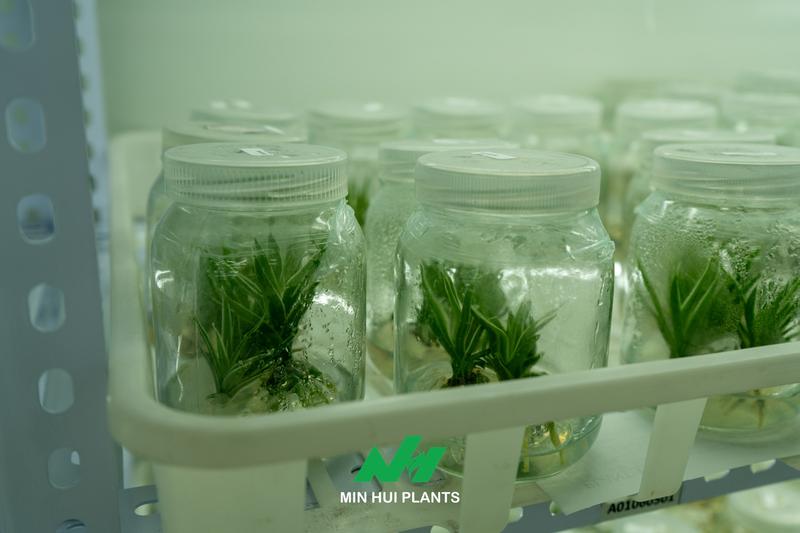
A professional acclimatization system must control several variables together:
- humidity reduction;
- substrate structure;
- root-zone aeration;
- irrigation frequency;
- light intensity;
- air movement;
- temperature stability;
- sanitation and disease pressure;
- plant spacing;
- timing of fertilizer introduction.
These variables interact. High humidity may reduce immediate water loss but also delay the development of stronger transpiration control. Excessive irrigation may protect young roots from drying but reduce oxygen and encourage decay. Low light may reduce stress initially but create weak growth if maintained too long.
The correct environment is therefore not the environment with the least stress.
It is the environment that introduces stress gradually enough for the plant to adapt without collapsing.
This is an important distinction. Many growers attempt to protect plantlets by keeping conditions extremely humid and gentle for too long. The plants may appear healthy, yet remain physiologically dependent on artificial protection. Once humidity changes or transportation begins, hidden weakness becomes visible.
Successful acclimatization is not about preventing all stress. It is about managing the dose, timing, and sequence of stress.
At MINHui, this process connects laboratory production with greenhouse reality. Plantlets are observed not only for survival, but for the quality of recovery. A plant that remains alive but stops growing for a long period may not be commercially successful. A strong acclimatized plant should resume active root and shoot development within a predictable period.
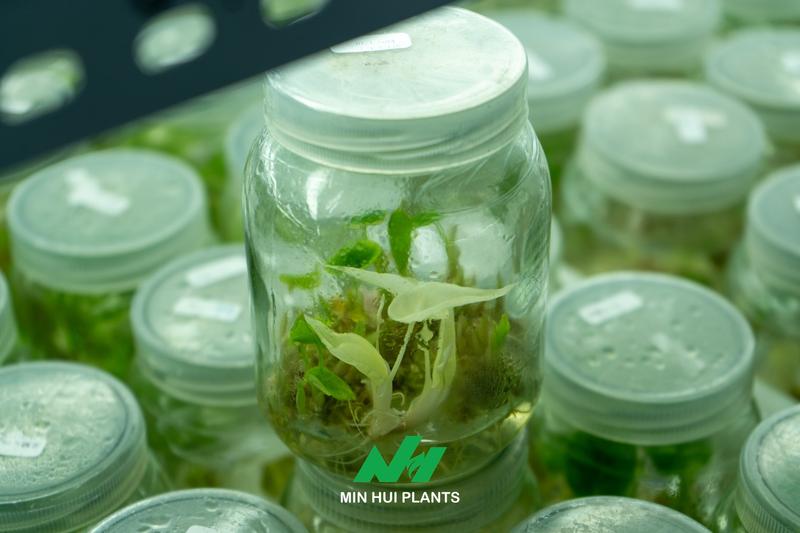
This adds another important principle:
Survival rate alone is an incomplete quality indicator. Recovery speed and growth uniformity matter just as much.
For example, a batch may achieve a high survival percentage, yet contain plants at very different stages of recovery. Some plants may develop rapidly, while others remain weak and delayed. The buyer still receives an inconsistent product, even though the statistical survival rate appears positive.
Commercial acclimatization must therefore evaluate batch uniformity, not merely individual survival.
This is particularly important for international buyers who plan greenhouse schedules, labor allocation, potting dates, and future sales. A batch that grows within a narrow and predictable range is easier to manage than a batch with mixed recovery performance.
The acclimatization stage also reveals problems that may have been hidden inside the laboratory. Off-type growth, weak rooting, contamination, abnormal leaf development, and uneven vigor can become more visible after transfer. In this sense, acclimatization is not only a growing stage. It is also a verification stage.
It tests whether the laboratory process has produced plants that remain stable under less protected conditions.
For MINHui, the objective is not to move the greatest possible number of plantlets out of bottles. The objective is to create a controlled transition in which plantlets become independent young plants with functional roots, stronger tissues, and predictable greenhouse behavior.
This may require slower movement, tighter grading, and more observation. It may also increase the rejection of weak material before larger resources are invested. Yet these decisions protect production space and reduce future inconsistency.
From a commercial perspective, early rejection is often less expensive than late failure.
A weak plant removed during acclimatization consumes limited resources. The same weak plant discovered after months of greenhouse cultivation has already occupied labor, space, substrate, water, packaging, and production time.
This is why acclimatization should be treated as part of quality control rather than merely plant care.
The deeper lesson is that tissue culture is not completed when multiplication ends. It is completed only when the plant can function beyond the laboratory.
MINHui’s view is clear: the laboratory creates biological possibility, but acclimatization determines whether that possibility becomes a stable product.